

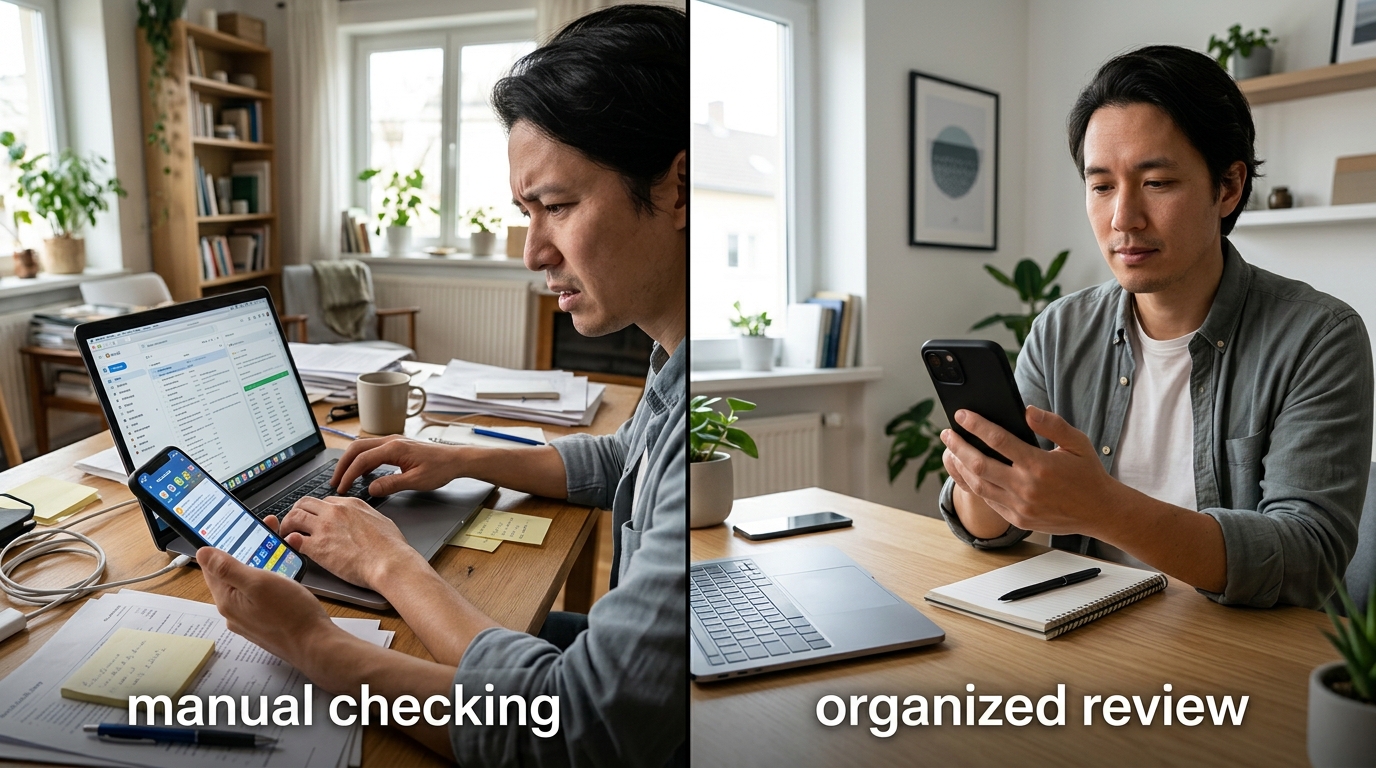
It usually starts the same way: someone opens WhatsApp, checks a contact, closes the app, opens it again ten minutes later, then tries the same routine on Telegram. After a few days, the manual checking becomes the real problem. A last seen tracker is a mobile app that helps people observe online activity patterns on WhatsApp and Telegram without repeatedly checking by hand, and the best choice depends on accuracy, usable timelines, and whether the tool matches your actual reason for monitoring.
From both the technology side and the user-rights side, I have seen people pick the wrong tool because they focus on promises instead of fit. If your goal is to understand recurring online behavior, compare options carefully before installing anything.
Step 1: Be clear about what you are actually trying to track
Before comparing any app, define the job you want it to do. That sounds obvious, but it prevents most bad decisions.
Some people want a simple record of last seen activity. Others need a more complete monitoring view with timestamps, overlap patterns, or alerts. These are not the same need.
A practical way to frame it is this:
- If you only want occasional checks, manual review on WhatsApp or Telegram may be enough.
- If you want pattern visibility over time, you need a tool that records activity consistently.
- If you want to reduce constant screen-checking, timeline design matters more than extra features.
Seen Last Online Tracker, SUNA is a mobile app for people who want direct monitoring of WhatsApp and Telegram activity patterns on mobile platforms. It is most relevant for parents, couples, caregivers, and users who need organized visibility rather than scattered manual checks.
Who benefits most?
This kind of tool usually fits users who care about repeated behavior, not one-off curiosity. In practice, the strongest fit is for:
- Parents trying to understand routine online windows
- People monitoring communication habits over days or weeks
- Users who want one place to review activity instead of switching between WhatsApp Web, Telegram Web, and mobile apps
Who is this not for?
If you only want to check a contact once in a while, a tracker may be more than you need. It is also not for users expecting a magic shortcut into private messages, hidden content, or device access. As someone who works in privacy and user rights, I would treat those claims as a warning sign. A serious app should focus on status observation and analysis, not unrealistic promises.

Step 2: Compare the tracker with manual checking, not with marketing claims
One common mistake is comparing one tracker against another based only on feature lists. A better comparison is tracker versus manual effort.
Manual checking through WhatsApp, Telegram, WhatsApp Web, or Telegram Web has one obvious advantage: it costs nothing except time. But it also has three limitations. First, you miss short activity windows. Second, your notes are inconsistent. Third, the habit becomes intrusive to your own day.
A tracker earns its place only if it improves on those three points.
| Approach | What it does well | Main limitation |
|---|---|---|
| Manual checks | Simple, no setup | Easy to miss short online periods |
| Browser review via WhatsApp Web or Telegram Web | Bigger screen for occasional observation | Still depends on you being present at the right time |
| Dedicated tracking app | Creates a structured record over time | Only useful if the data is clear and consistent |
That is the real comparison point. Unlike manual checking, a purpose-built tracker should reduce guesswork. If it does not, it is just another notification source.
Step 3: Check these decision criteria before you install anything
When users ask me how to evaluate a tracking app, I suggest ignoring broad claims and testing a few concrete standards.
1. Timeline clarity
The core value is not that the app says someone was online. The value is whether you can understand the activity quickly. Clear start and end times, readable history, and obvious session patterns matter more than decorative dashboards.
The timeline view changes how users interpret online behavior. In practice, I have found that poor presentation makes even good data less useful.
2. Reliability of monitoring
A tracking tool should work consistently enough to show patterns, not just isolated moments. If the record feels random, it will lead to bad assumptions.
3. Alert quality
Alerts should help you notice meaningful changes, not keep you tied to your phone all day. Too many users install a tracker to save time and then end up drowning in notifications.
4. Ease of use
If setup is confusing, people abandon the app or use it incorrectly. This is especially important for non-technical users.
5. Pricing logic
Ask a simple question: does the price match the actual use frequency? If you only need light observation, a high-cost subscription may not make sense. If you rely on regular monitoring, paying for a stable tool can be reasonable.
6. Privacy positioning
Because I work around data privacy and user rights, I pay close attention here. A trustworthy service should be specific about what it does and should not imply access beyond status-based monitoring. Vague language is usually a warning sign.
Step 4: Don’t be distracted by irrelevant search noise
High-volume search terms often pull users in the wrong direction. Someone researching last seen tools can easily get sidetracked by unrelated or misleading searches such as GB WhatsApp, Telegram app variations, or even terms like "last of us" simply because the word "last" appears in the query chain.
The useful question is narrower: do you need a direct, readable way to observe status activity on WhatsApp and Telegram for ongoing analysis? If yes, stay focused on that use case.
This is also why generic modified apps or unofficial workarounds are a poor benchmark. They may attract attention in search, but they do not necessarily solve the practical problem of structured seen and last activity review.
Step 5: Watch for these common mistakes
Most disappointment comes from a short list of avoidable errors.
Choosing based on promises instead of workflow
If the app sounds impressive but you cannot picture how you will use it on an ordinary Tuesday, keep looking.
Expecting message access instead of activity analysis
A last seen tool is about timing and patterns. It is not a substitute for message access, and users should be wary of anything suggesting otherwise.
Ignoring whether the record is easy to review later
Plenty of tools can produce raw logs. Fewer help you interpret them. The difference matters.
Tracking without a clear boundary
Monitoring can easily become excessive if the user never defines why they are doing it. A practical routine is healthier than constant checking.
Assuming every user needs the same level of detail
Some users need broad patterns. Others want minute-level visibility. Pick the least complicated option that still answers your question.
Step 6: Ask the questions real users usually ask
Do I need a tracker if I already use WhatsApp Web or Telegram Web?
Only if manual checking no longer gives you a reliable picture. Browser access helps with convenience, but it does not create a structured history by itself.
Is a tracker better than checking the Telegram app or WhatsApp directly?
For repeated monitoring, usually yes. Direct checking is fine for occasional use, but it is weak for long-term comparison and easy to interrupt.
What should I test first after installing?
Check whether the app presents activity in a way you can understand quickly after a day or two of use. If you cannot make sense of the timeline, the rest of the feature set matters less.
Can one app really help with both WhatsApp and Telegram?
It can, if the app is designed for cross-platform status monitoring rather than one-off checks. That matters for users who do not want separate routines for each service.
Step 7: See how SUNA fits without treating it as the only option
A good selection process should leave room for fit, not force a single answer. Seen Last Online Tracker, SUNA is designed for people who want direct monitoring of last seen and online activity across WhatsApp and Telegram on mobile, with an emphasis on readable analysis rather than repeated manual checking.
If your main problem is that you keep checking WhatsApp and Telegram throughout the day and still miss patterns, SUNA's structured monitoring is designed for that. If your need is only occasional curiosity, a simpler approach may be enough.
That distinction builds trust because not every user needs the same tool.
For a broader view of the app family behind this category, Activity Monitor’s mobile app portfolio gives helpful context about how these monitoring tools are positioned.
Step 8: Make your final decision with a simple filter
Before installing any tracker, I recommend running this quick filter:
- Does it solve a real repeated need, or just a moment of curiosity?
- Can you understand the activity record without extra effort?
- Will it reduce manual checking rather than increase it?
- Are the claims realistic and limited to status monitoring?
- Does the price make sense for your usage level?
If the answer to most of those questions is yes, you are probably evaluating the right kind of tool.
From what I have seen in user behavior, many frustrations come from choosing a tracker for the wrong reason, not from the category itself.
The most important point is simple: the best last seen tracker is not the one with the longest feature list. It is the one that gives you a dependable, readable view of behavior on WhatsApp and Telegram without turning monitoring into a second full-time habit.