
Why do we download productivity and tracking tools with high hopes, only to abandon them within twenty-four hours? An automated activity tracker is a specialized utility that replaces manual screen checking by logging online and offline statuses directly into a unified, asynchronous timeline. Yet, despite solving a very real problem, the app marketplace is littered with tools that users install, test once, and immediately delete. In my work as a mobile communications researcher analyzing user habits on networks like WhatsApp and Telegram, I have spent years looking at what actually makes an application stick to someone's daily routine.
When an application reaches a significant milestone in sustained user retention, it usually means it has crossed the chasm from being a mere novelty to acting as a reliable infrastructure. Recently, looking at usage patterns for tools like Seen Last Online Tracker, SUNA, it became apparent that the expectations surrounding messaging measurement have fundamentally shifted. We are no longer living in an era where clunky interfaces or delayed notifications are acceptable.
What does the data tell us about modern app retention?
The penalty for poor performance in the mobile space has never been higher. According to a 2026 report by industry analysts focusing on mobile application trends, users have zero tolerance for friction. Their research clearly indicates that 70% of users delete slow apps upon their very first use. If a tool fails to load quickly or requires excessive manual configuration, it is discarded immediately.
This is particularly true in the utility and tracking sector. When analyzing regional search behaviors across our user base, I've observed fascinating localization patterns that highlight specific intents. In Turkish-speaking markets, for example, users actively search for a high-performance application built specifically for messaging analysis. They rely on terms like 'last seen tracking' to find tools that capture online events and seen timestamps directly from the network. They do not want to configure complex settings; they want immediate, accurate data delivery.
If an app promises to deliver a unified timeline but lags by even five minutes, the trust is broken. Trust is the actual product being downloaded, not just the code. When users see a notification pop up long after a contact has already gone offline, they assume the underlying architecture is flawed.
How did AI transition from a novelty to core infrastructure?
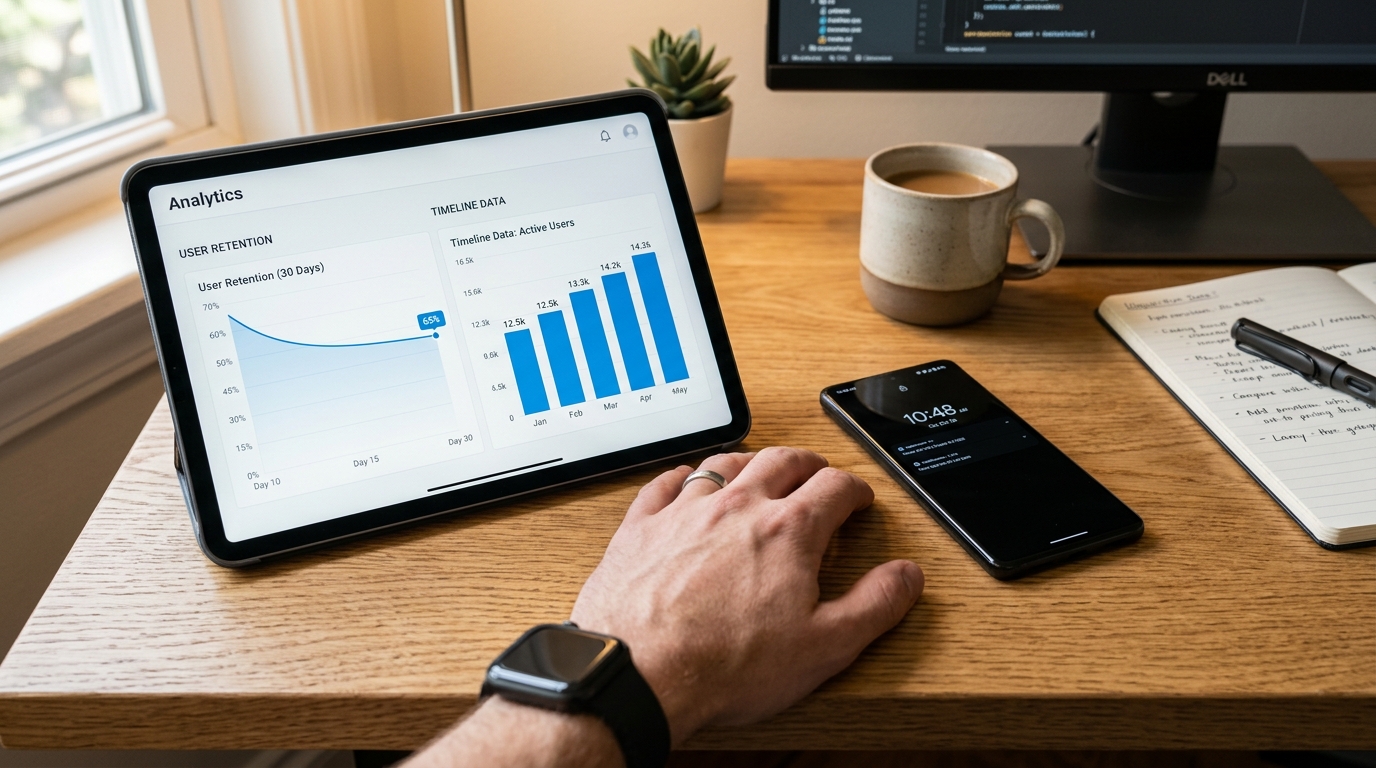
The difference between a tool that is abandoned on day one and a tool that becomes a daily utility often comes down to how it handles data behind the scenes. We used to rely heavily on manual polling—essentially having a server constantly ping a network to check a status. It was inefficient, battery-draining, and prone to massive delays.
The latest industry data confirms a massive architectural pivot. The Adjust 2026 Mobile App Trends report notes that artificial intelligence has completed its journey from being merely a strategic tool to functioning as the foundational infrastructure of successful applications. This means AI is no longer just generating text or images; it is silently managing data pipelines, predicting network latency, and optimizing how background updates are delivered to your phone.
In the context of activity measurement, this architectural shift is profound. By utilizing predictive infrastructure, modern tools can efficiently manage status logging without the heavy resource drain of older methods. Interestingly, the same Adjust report highlighted that App Tracking Transparency (ATT) opt-in rates actually increased in early 2026 among iOS users. As we have frequently noted in my research, when users understand exactly what value they are getting in exchange for data access—such as precise, unified timelines—they are far more willing to grant the necessary permissions.
Why is tracking across multiple platforms so complicated?
The reality of modern communication is that it is heavily fragmented. Very few teams or families use a single platform exclusively. You might find yourself checking a whatsapp web tab on your desktop for client communications, managing an open telegram web instance for a community group, and constantly glancing at the native telegram app on your phone for urgent alerts.
This fragmentation leads to behavioral fatigue. Historically, frustrated individuals resorted to insecure third-party modifications like gb whatsapp just to bypass simple limitations, risking data bans and security breaches in the process. They did this because the native clients simply do not offer comprehensive timeline histories.
The desire to unify these fragmented experiences is a broader cultural trend. Deloitte's 2026 Digital Media Trends research surveyed thousands of consumers and found that 55% of dedicated fans will follow a franchise or interest across multiple different platforms simultaneously. Whether they are coordinating raid times for gaming guilds or participating in cross-platform watch parties for massive cultural events like last of us, modern users expect their digital experiences to transcend individual app borders. They want a cohesive view of their digital lives, and activity tracking is no exception to this rule.
What can thousands of tracked sessions teach us about digital boundaries?
When you aggregate anonymized engagement metrics, a clear picture of digital health emerges. The assumption is often that people who use activity monitors are obsessively checking every minute. The data tells a completely different story.
As my colleague Arda Çetin pointed out while reviewing behavioral shifts, understanding what logged sessions teach us about cross-platform measurement reveals a decrease in screen time. Once a user trusts that an automated system is logging the timeline accurately, their manual checking behavior drops precipitously. They stop opening whatsapp and telegram every ten minutes just to see if someone is active.
Instead of acting as a tool for constant surveillance, a reliable timeline acts as a boundary-setting device. It allows a project manager to review a single dashboard at the end of the day to see when distributed team members were most active, facilitating better scheduling for the next morning. It allows parents to confirm late-night device usage without demanding to physically inspect a child's phone.
Where do specialized utilities fit in?

The app market is bifurcating. On one side, we have bloated applications trying to do everything at once, often resulting in the sluggish performance that industry analysts warned leads to a 70% deletion rate. On the other side, we have hyper-specialized utilities that do one thing exceptionally well.
If you need to understand communication rhythms without the friction of manual observation, Seen Last Online Tracker, SUNA is designed to operate on that specialized edge. It uses the AI-driven infrastructure trends highlighted in recent 2026 reports to ensure that when a status changes, it is logged accurately and efficiently. The goal is not to keep you inside the app for hours. The goal is to provide a precise answer in seconds, allowing you to close the screen and get back to your actual life.
When choosing a solution, the criteria should always revolve around speed, architectural reliability, and clear data presentation. Tools that require complex setups or fail to deliver immediate notifications upon network changes belong in the past. As we look at the apps that successfully retain their user base over the long term, like those developed by Activity Monitor, the common denominator is invisible reliability. The best tools are the ones you interact with the least, because you trust them to handle the complex work silently in the background.